
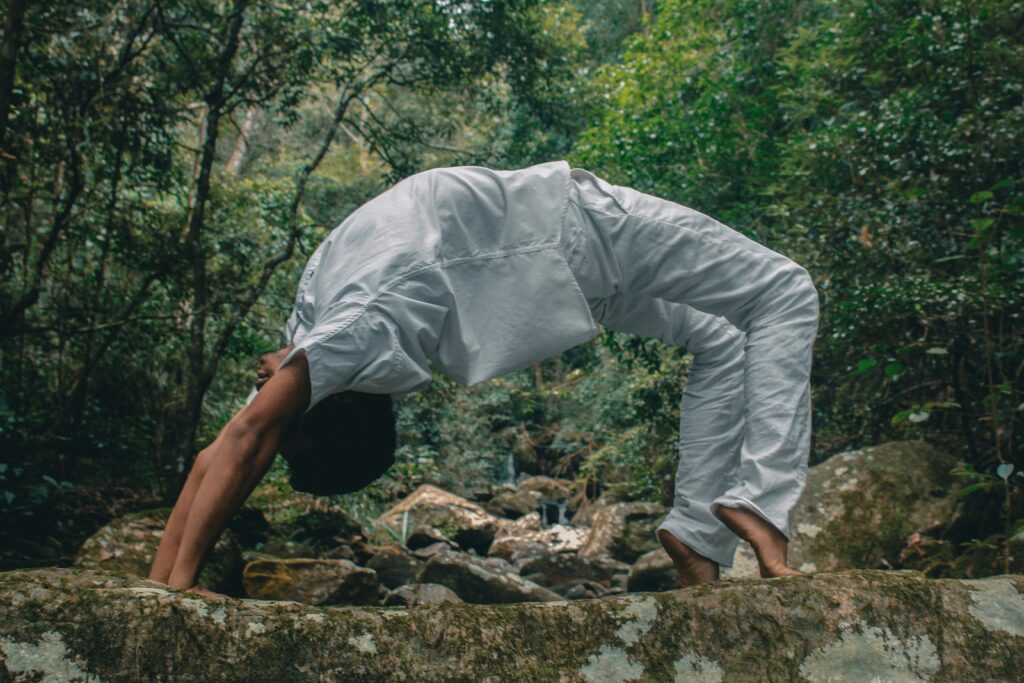
As I navigate the demands of modern life, I often find myself searching for anchors, for practices that can ground me amidst the flux. Yoga, for me, has become one such anchor. It’s not just about contorting my body into various shapes; it’s a deliberate engagement with my physical form that extends into my mental and emotional landscape. This exploration of yoga flows, specifically through the lens of mindful movement, has been a journey toward cultivating a more profound sense of inner peace.
Mindful movement, in the context of yoga, is essentially the act of bringing conscious awareness to each inhale, each exhale, and every subtle shift in the body. It’s about eschewing the autopilot mode we so often inhabit and instead choosing to be fully present with our physical sensations, our breath, and our thoughts as they arise. This isn’t about achieving a perfect pose; it’s about the process, the unfolding, the journey within.
Defining Mindfulness in a Yogic Context
Mindfulness, as understood in yoga, is a quality of attention. It’s the sustained, non-judgmental observation of the present moment. When applied to movement, it means paying attention to the sensations in your muscles, the alignment of your spine, the rhythm of your breath, and the thoughts that might be flitting through your mind. It’s like a gentle spotlight, illuminating only what is happening right now, without the need to analyze or alter it.
The Breath as the Compass
The breath is the fundamental tool in mindful yoga. It acts as a compass, guiding my awareness back to the present moment whenever my mind wanders. In yoga, the breath is not merely an autonomic function; it’s an intelligent partner in the practice. My breath rhythm dictates the pace of my movements, creating a synchronized dance between body and breath. When I inhale, I often feel a sense of expansion, of drawing in energy. As I exhale, there’s a sensation of release, of letting go. This conscious connection transforms passive breathing into an active engagement with my internal state.
Embodied Awareness: Beyond the Physical Form
Embodied awareness refers to the deep understanding and acceptance of my body as a source of information, not just a vessel. Through mindful movement, I learn to listen to my body’s signals – the dull ache of tension, the subtle whisper of fatigue, the exhilarating stretch of a muscle. This isn’t about pushing through pain or ignoring discomfort, but rather about understanding its message. It’s about recognizing that my body is a living library, and mindful movement is the key to reading its stories.
The Mechanics of Yoga Flows and Inner Peace
Yoga flows, often referred to as Vinyasas, are sequences of postures linked together by breath. The continuous movement from one pose to the next, synchronized with the inhale and exhale, creates a dynamic meditation. This rhythmic transition is where the magic of cultivating inner peace truly begins to manifest.
The Vinyasa: A Symphony of Breath and Motion
A Vinyasa sequence can be likened to a carefully choreographed dance where each step is precisely timed with a musical note. In the case of yoga, the breath is the music, and the poses are the dancers. The smooth transition between poses, such as moving from downward-facing dog to plank and then to chaturanga, requires a focused engagement with the body. I find that when I commit to this synchronicity, my mind has less space to entertain distracting thoughts. It’s absorbed in the physical demands and the energetic flow.
Building Heat and Releasing Tension
The continuous movement of a Vinyasa flow generates internal heat. This heat is not just physical; it’s an energetic phenomenon that can help to release deeply held tension within the muscles and fascia. As my body warms up, I notice that areas of tightness begin to soften and open. This physical release often has a corresponding emotional and mental release. It’s as if the locked-up energy in my body starts to unravel, bringing a sense of lightness and ease.
Cultivating a State of Flow
The concept of “flow” in psychology, popularized by Mihaly Csikszentmihalyi, describes a state of energized focus, full involvement, and enjoyment in the process of an activity. Yoga flows, when practiced mindfully, can induce this state. When I am fully immersed in the movement, aware of my breath, and connected to my body, the external world fades away, and I am left with a sense of deep absorption. This is a powerful antidote to the scattered attention that often characterizes modern life.
Specific Yoga Flows for Inner Peace

While many yoga styles can contribute to inner peace, certain flows are particularly effective in their ability to calm the nervous system and foster introspection. I’ve found that these sequences act like gentle waves, washing over the mind and leaving it clear and serene.
The Gentle Morning Flow
This flow is designed to awaken the body and mind gently, preparing me for the day ahead without overwhelming my senses. It typically begins with seated pranayama (breathing exercises) and simple stretches, gradually moving into Sun Salutations A (Surya Namaskar A) with a slower, more deliberate pace.
Seated Breathwork (Pranayama)
Before any physical movement, I often find solace in seated breathwork. Practices like Nadi Shodhana (alternate nostril breathing) or simple diaphragmatic breathing can help to regulate my breath and bring my mind into a calmer state. This initial period of stillness is like clearing the canvas before painting.
Gentle Asanas for Awakening
Poses like Cat-Cow (Marjaryasana-Bitilasana) to mobilize the spine, Child’s Pose (Balasana) for a sense of grounding, and gentle twists to release tension in the back are crucial. My focus here is on slow, controlled movements, feeling the stretch in each muscle and noticing how my breath supports the action.
Modified Sun Salutations
When I’m starting my day, I prefer a modified Sun Salutation. This might involve holding poses for a few extra breaths, going through the sequence more slowly, or even omitting certain dynamic elements if my body feels less inclined. The key is to honor how I feel, rather than adhering rigidly to a prescribed sequence.
The Calming Evening Flow
This flow is intended to release the stresses of the day and prepare the body and mind for restful sleep. It emphasizes longer holds in restorative poses and includes gentle stretches that encourage relaxation.
Grounding Poses
Poses like Legs-Up-the-Wall (Viparita Karani) and Supported Bridge Pose (Setu Bandhasana) are excellent for calming the nervous system. These poses allow my body to rest deeply, promoting a sense of release and letting go.
Forward Folds and Gentle Twists
Seated forward folds, such as Paschimottanasana (Seated Forward Bend), or supported variations, encourage introspection and a surrender to gravity. Gentle supine twists, like Supta Matsyendrasana (Reclined Spinal Twist), can release tension in the back and abdomen, preparing the body for rest.
Yin Yoga Principles
Incorporating elements of Yin Yoga, where poses are held for several minutes to target deep connective tissues, can be incredibly beneficial in an evening flow. This slower, more passive approach allows for a deeper release of physical and energetic blockages.
Integrating Mindfulness into Every Pose

Mindfulness is not a separate element to be added to yoga; it is the very essence of the practice. I strive to bring a conscious awareness to every posture, regardless of its complexity. This means constantly checking in with my body and my breath.
The Art of Active Listening to the Body
Active listening to the body in yoga is about being attuned to its messages without judgment. If a pose feels like too much, I back off. If it feels accessible and beneficial, I explore the edges of my comfort. It’s not about forcing myself into a shape, but about allowing my body to move from a place of informed awareness. My body is not a sculpture to be perfected; it’s a living entity with its own wisdom.
Breath as the Anchor in Challenging Poses
When I find myself in a more challenging pose, my breath becomes my lifeline. Instead of holding my breath or finding myself gasping for air, I consciously try to deepen and lengthen my inhales and exhales. This sustained breath helps to anchor me in the present moment, preventing my mind from spiraling into thoughts of doubt or frustration. The breath is the steady hum beneath the complex melody of the pose.
Noticing Thoughts Without Attachment
During a yoga flow, thoughts will inevitably arise. They are like clouds drifting across the sky of my awareness. The practice of mindfulness is about noticing these thoughts without getting caught up in them. I acknowledge their presence, then gently guide my attention back to my breath and my body. It’s like watching a river flow by, observing the debris without jumping in.
The Lingering Effects: Inner Peace Beyond the Mat
The benefits of mindful yoga flows extend far beyond the time spent on the mat. The practice cultivates a greater sense of calm, resilience, and self-awareness that I can carry into all aspects of my life.
Enhanced Emotional Regulation
Through consistent mindful movement, I find that I develop a greater capacity to regulate my emotions. When faced with challenging situations off the mat, I can draw upon the calm and centeredness I cultivated during my practice. It’s as if the yoga mat becomes a training ground for my inner emotional landscape.
Increased Self-Awareness and Self-Compassion
As I become more attuned to my body and my breath, I also develop a deeper understanding of my own patterns of thought and behavior. This self-awareness, coupled with the non-judgmental attitude cultivated in yoga, fosters self-compassion. I learn to accept myself, imperfections and all, with kindness and understanding. My journey on the mat is a mirror, reflecting not just my posture, but my internal state.
A Quieter Mind and a More Present Life
The most profound impact of mindful yoga flows on my life is the cultivation of a quieter mind. The constant mental chatter begins to subside, replaced by a sense of spaciousness and stillness. This allows me to be more present in my interactions, more engaged in my work, and more appreciative of the simple moments that make up my life. The practice is not about escaping reality, but about fully inhabiting it with clarity and peace.